
Creating a home workspace that is both relaxing and productive can transform your work-from-home experience. Whether you’re working remotely full-time or just occasionally, having a dedicated area designed to support focus and calm can make a big difference in your daily routine. This guide shares practical tips to help you set up a space that helps you stay efficient without feeling stressed.
Why a Relaxing and Productive Workspace Matters
Your workspace influences how you feel and work throughout the day. An organized, comfortable environment reduces distractions and fatigue, making it easier to concentrate on tasks. When your space also feels relaxing, it can help lower stress and increase motivation, leading to better work quality and a healthier balance between work and personal life.
Choosing the Right Location
Find a Dedicated Spot
Pick a specific area in your home to serve as your workspace. Avoid working from your bed or couch, as these places are linked to relaxation and might make it harder to focus. Ideally, choose a quiet corner or even a spare room where you can set up without interruptions.
Maximize Natural Light
Natural light can boost mood and energy. Position your desk near a window if possible, but use blinds or curtains to control glare on your screen. If natural light isn’t an option, invest in good-quality artificial lighting that’s bright but not harsh.
Designing for Comfort and Ergonomics
Invest in a Good Chair and Desk
Comfort is key for long periods at your workstation. Choose an ergonomic chair that supports your back and encourages good posture. Your desk should be at a height that allows your elbows to rest at about a 90-degree angle when typing.
Organize Your Equipment
Keep your computer, keyboard, mouse, and other tools within easy reach to prevent strain. Use a monitor stand or adjustable arm to position your screen at eye level, reducing neck tension.
Add Comfort Elements
Consider a footrest if your feet don’t reach the floor comfortably. Use a wrist pad for keyboard and mouse support to avoid repetitive strain injuries.
Creating a Calming Atmosphere
Choose Colors Wisely
Colors impact mood and productivity. Soft blues, greens, and neutrals tend to create a soothing environment, while bright colors can be energizing. Select a palette that makes you feel calm but alert.
Bring Nature Inside
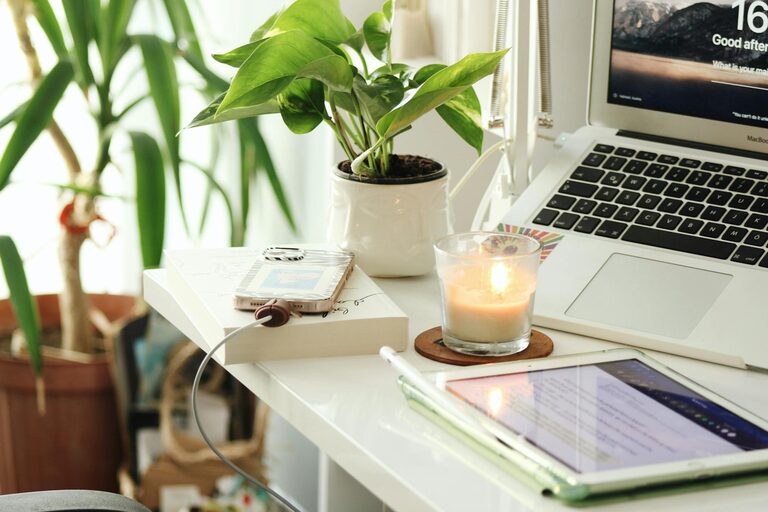
Incorporate plants or flowers into your workspace. They not only improve air quality but also add a natural element that reduces stress and promotes relaxation.
Manage Noise and Distractions
If noise is an issue, consider noise-canceling headphones or a white noise machine to block out distractions. Keep your workspace tidy and free from clutter to help maintain focus.
Organizing for Efficiency
Use Storage Solutions
Keep your workspace organized with shelves, drawers, or baskets. Having a specific place for everything minimizes clutter and saving time looking for items.
Establish a Filing System
Whether physical papers or digital files, create an organized system for documents related to your work. Label folders clearly and regularly declutter to keep your space functional.
Plan Your Daily Tasks
Use a planner, calendar, or a digital app to outline your daily and weekly work goals. Seeing your priorities helps keep your day structured and reduces overwhelm.
Encouraging Breaks and Movement
Schedule Regular Breaks
Take brief breaks every hour to stretch or walk around. Short pauses improve concentration and prevent fatigue.
Include a Relaxation Zone
If space allows, add a small area with a comfortable chair or yoga mat for quick relaxation or mindfulness exercises during breaks.
Stay Hydrated and Nourished
Keep a water bottle nearby and have healthy snacks on hand to keep energy levels steady throughout your work sessions.
Personalizing Your Workspace
Add Inspirational Items
Personal touches like photos, artwork, or motivational quotes can make your workspace inviting and encourage positivity.
Avoid Overloading Decorations
While personalizing is important, too many items can create distractions. Keep a balance between meaningful décor and a clutter-free environment.
—
By thoughtfully designing your home workspace using these tips, you can create a balanced area that supports both relaxation and productivity. Remember, the ideal setup varies from person to person, so don’t hesitate to adjust elements until it feels just right for you. A well-crafted workspace is an investment in your wellbeing and success.